AI system
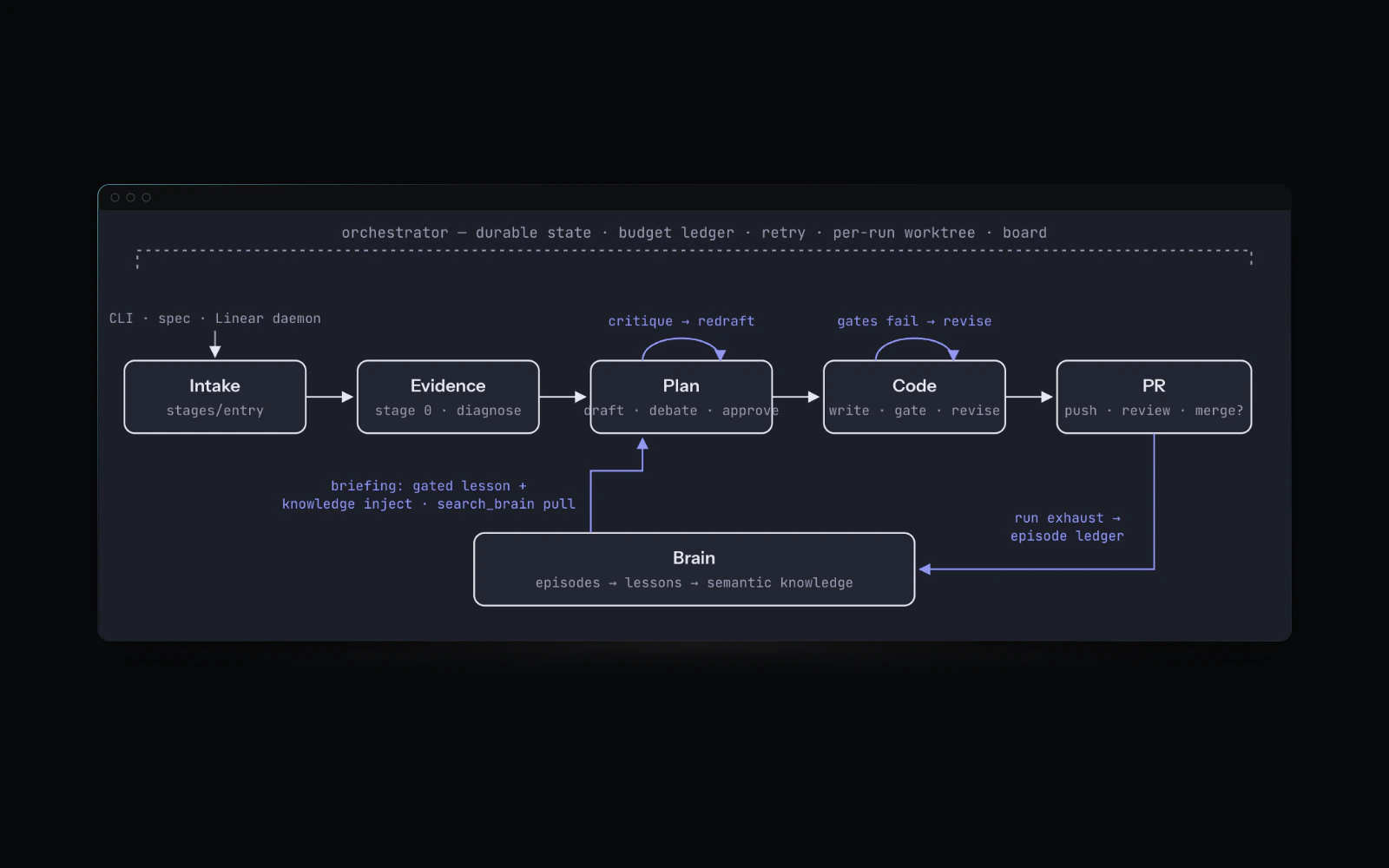
My first agent pipeline: it takes a task from plan to code to pull request, and learns from its own runs.
Where it's at
My first agent pipeline ran from May to September 2026. It took real tasks from a ticket to a pull request, on its own code and on Duo Decide. I'm now building the next version, Distill, with a coworker, and this pipeline is being retired as Distill takes over.
- 609commitsBuilt May to September 2026, with 251 test files.
- 175recorded runsEvery run in the ledger, July to September 2026. Counted November 2026.
- Built its own last two piecesOnce the daemon ran, it finished its own milestone.
From the first pipeline to Distill
First commit
A pipeline that plans, writes code and opens a pull request, with a budget on every stage from day one.
The board
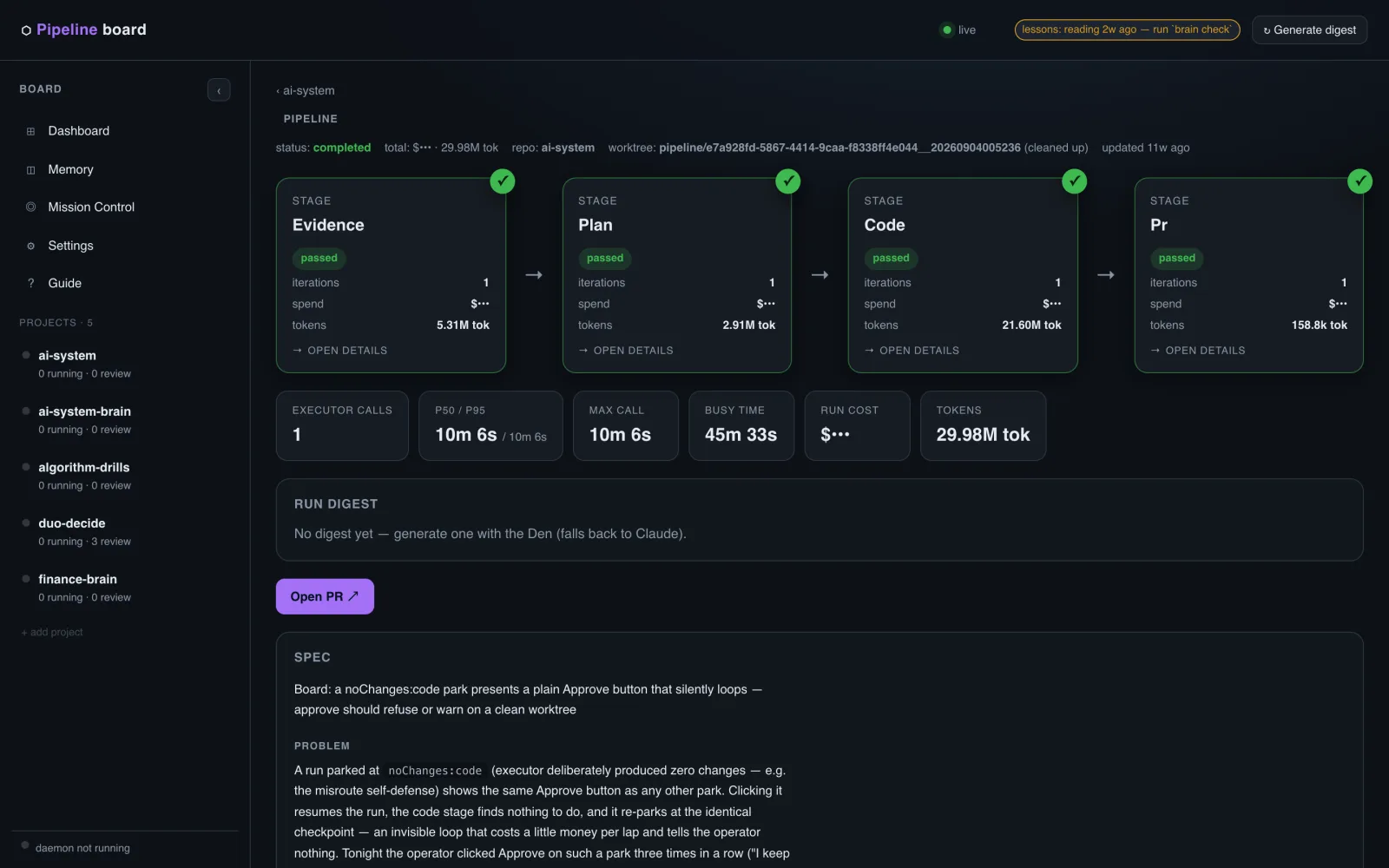
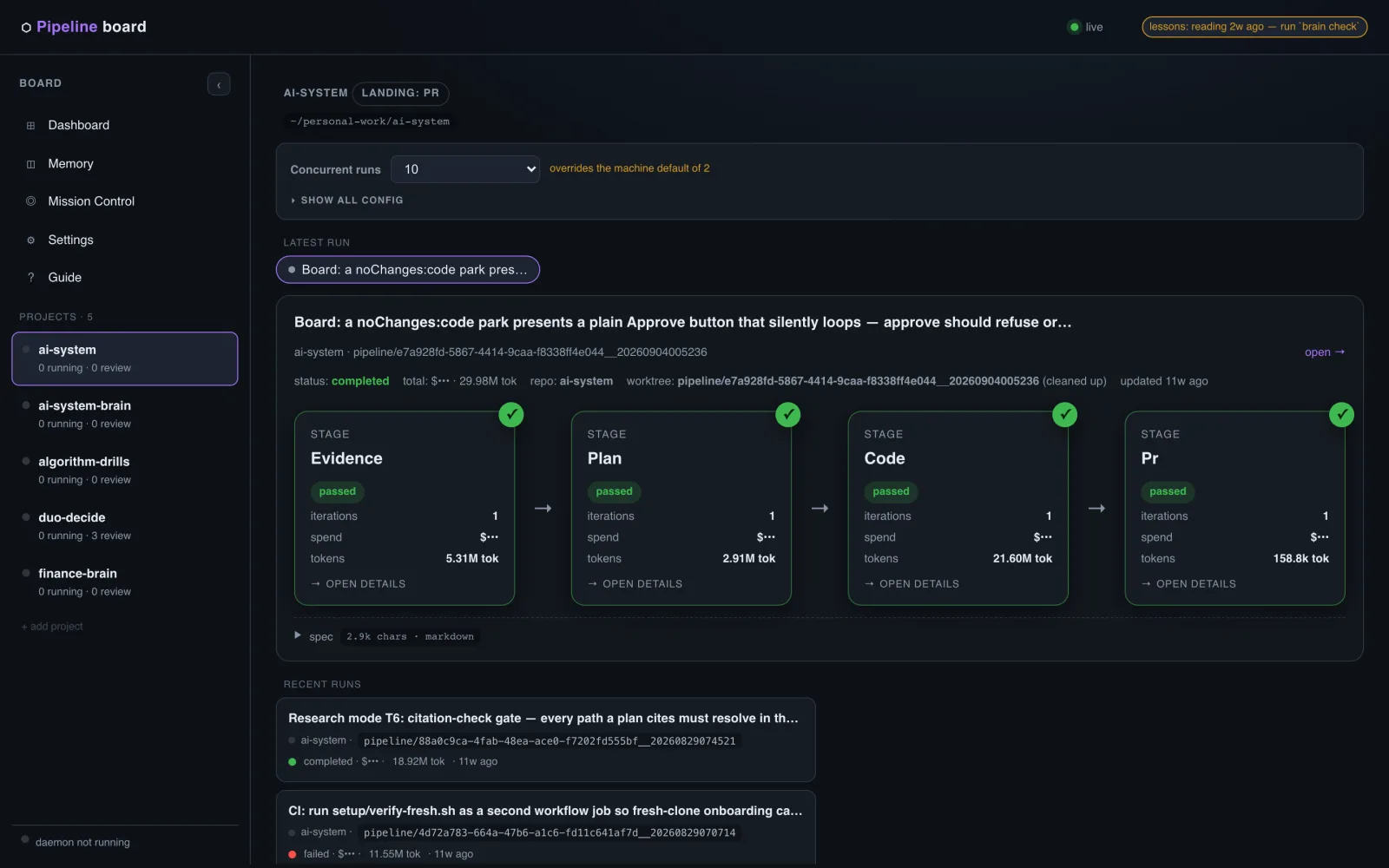
A local board shows every run as a line of stages, with live status, spend and the pull request.
The ledger
Every run is recorded as an episode. In August the board's Memory view joined each run to what it left behind.
Lessons
Repeated failures become ranked lessons the planner can pull, behind a gate built to say no.
- Next version
Distill
What it is
Distill
Distill is the next version: a code factory, the execution layer that takes a ticket through to a pull request.
Captain's log
From GitHub- Spoken output for agent sessions.
- Brain dumps now file straight into my personal brain.
- Board fix: the live run stream stays connected.
Not yet grown
- Rebuild as Distill, Not yet grownGoal
- Model cascade with a verifier, Not yet grownIdea
- Reranked memory search, Not yet grownIdea
Branch rings
No ring growingRan real tasks on itself and on Duo Decide.
Branch section · AI system. Each ring is a quarter of work.
Go deeper
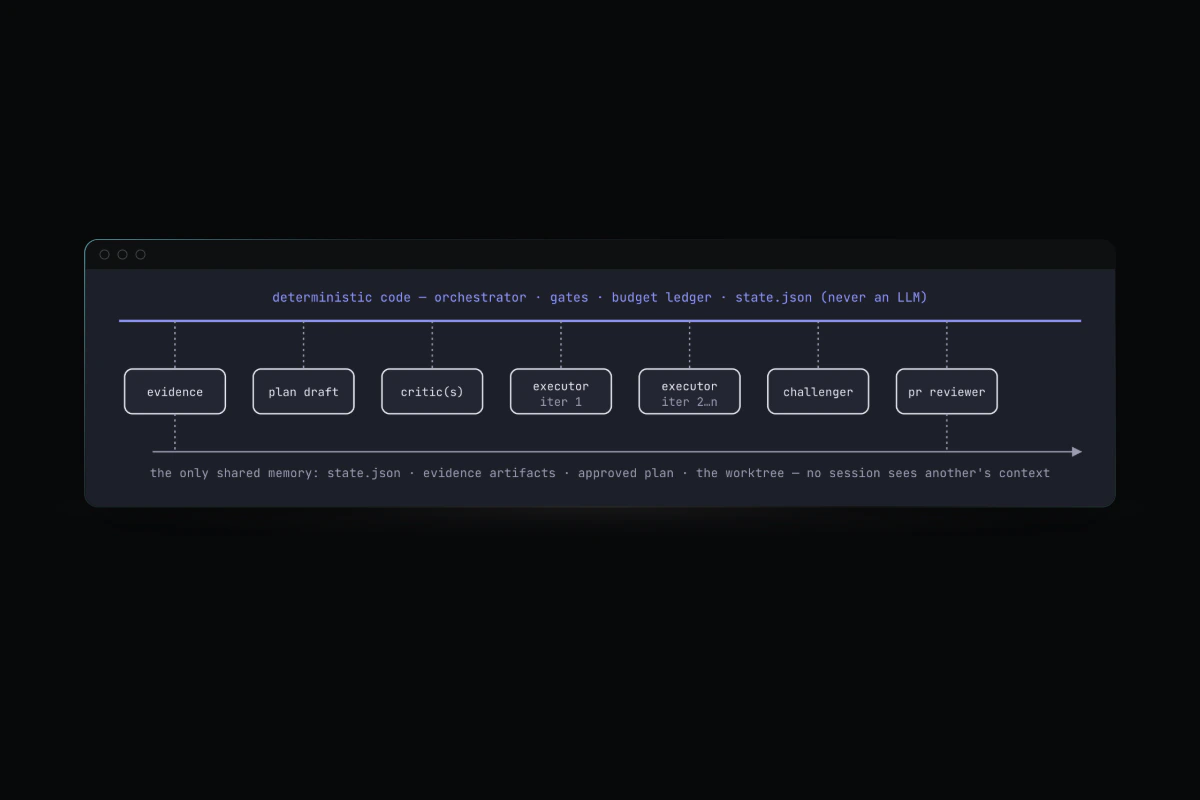
One system that runs the whole loop (plan, build, check, open a pull request) and gets better from its own history. The rule of the house: the model picks what; code picks where and how.
The daemon
Tickets moved to In Progress run on their own: it dispatches, retries, parks and writes back. It built its own last two pieces.
Pull request · ai-system #64 · roadmap M3
The board
Agents building UI read the board's design-system mocks before they touch it. Here it moves from the dashboard into one run.
Commit · feat(ui): local pipeline progress board
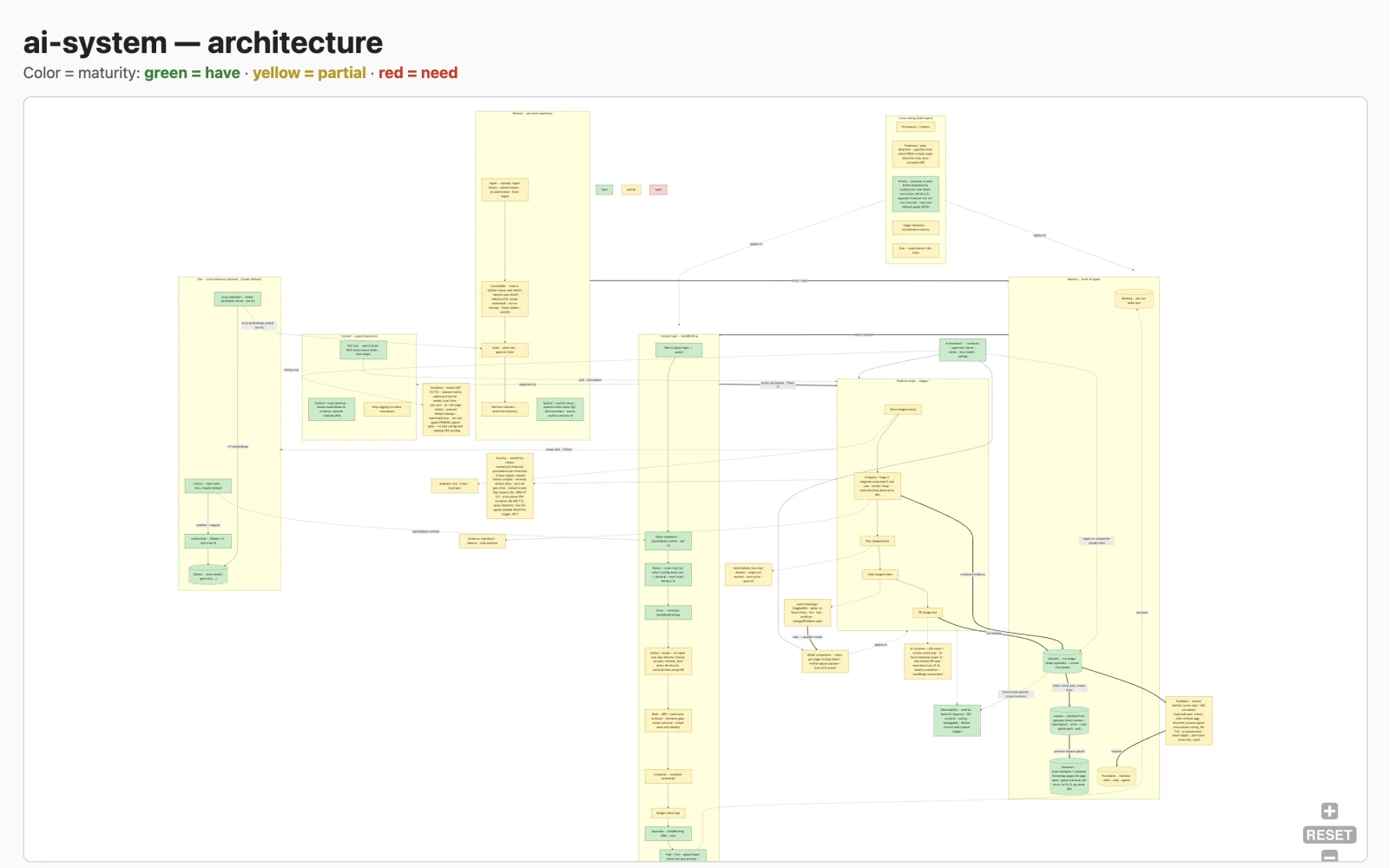
The architecture map
51 parts, coloured by maturity: 20 built, 30 partial, 1 still needed.
Doc · architecture/architecture.json
A panel of twelve critic personas debating each plan. An evidence stage that reproduces the problem before any planning. A ledger that records every run, and a weekly job that ranks repeated failures into lessons. A board with its own design system, so agents building UI could read the mocks. Spend caps per run and per stage from the first day.
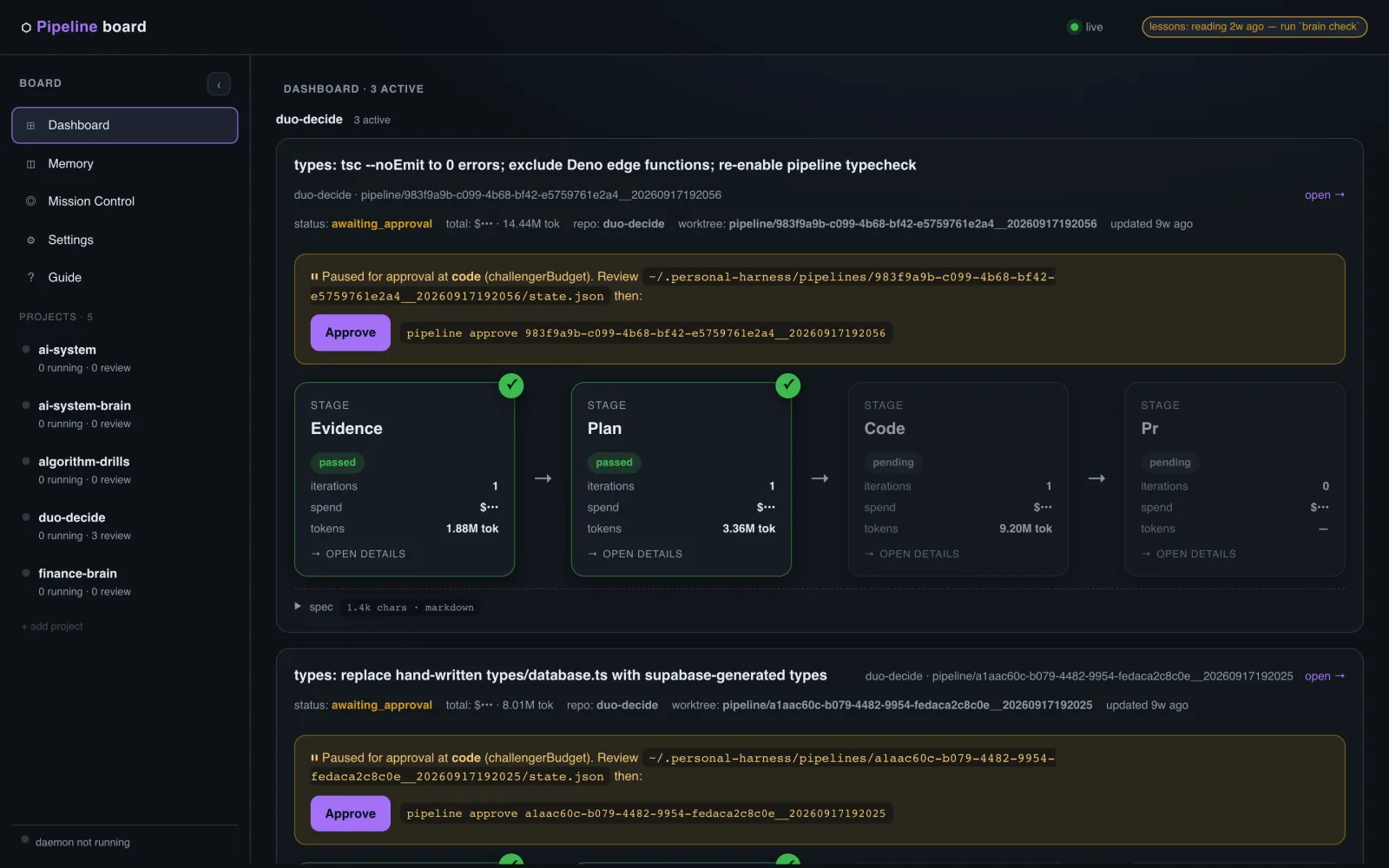
Spend caps
Three Duo Decide runs stopped at the code stage when they reached their spend cap, and waited there to resume.
Capture · the board, spend masked
First proof
Five runs on two repos finished with no interventions, and the first two lessons came out of them.
Roadmap · M1 exit, pull request #43
Data first
An inventory found lots of code, zero real runs and an empty ledger. I stopped adding features and fed it real tickets.
Roadmap · Why this order
The lesson loop was wired but starved. When I audited it in July, 60 of 73 runs had pulled in no lessons at all. The gate was doing its job: every lesson was about how runs fail, so it rightly said no to product work. The weekly job that made lessons had also run once and never again, because it was scheduled for an hour when my machine was asleep. Real improvement was coming from the pipeline's own review loop, not from the lessons.
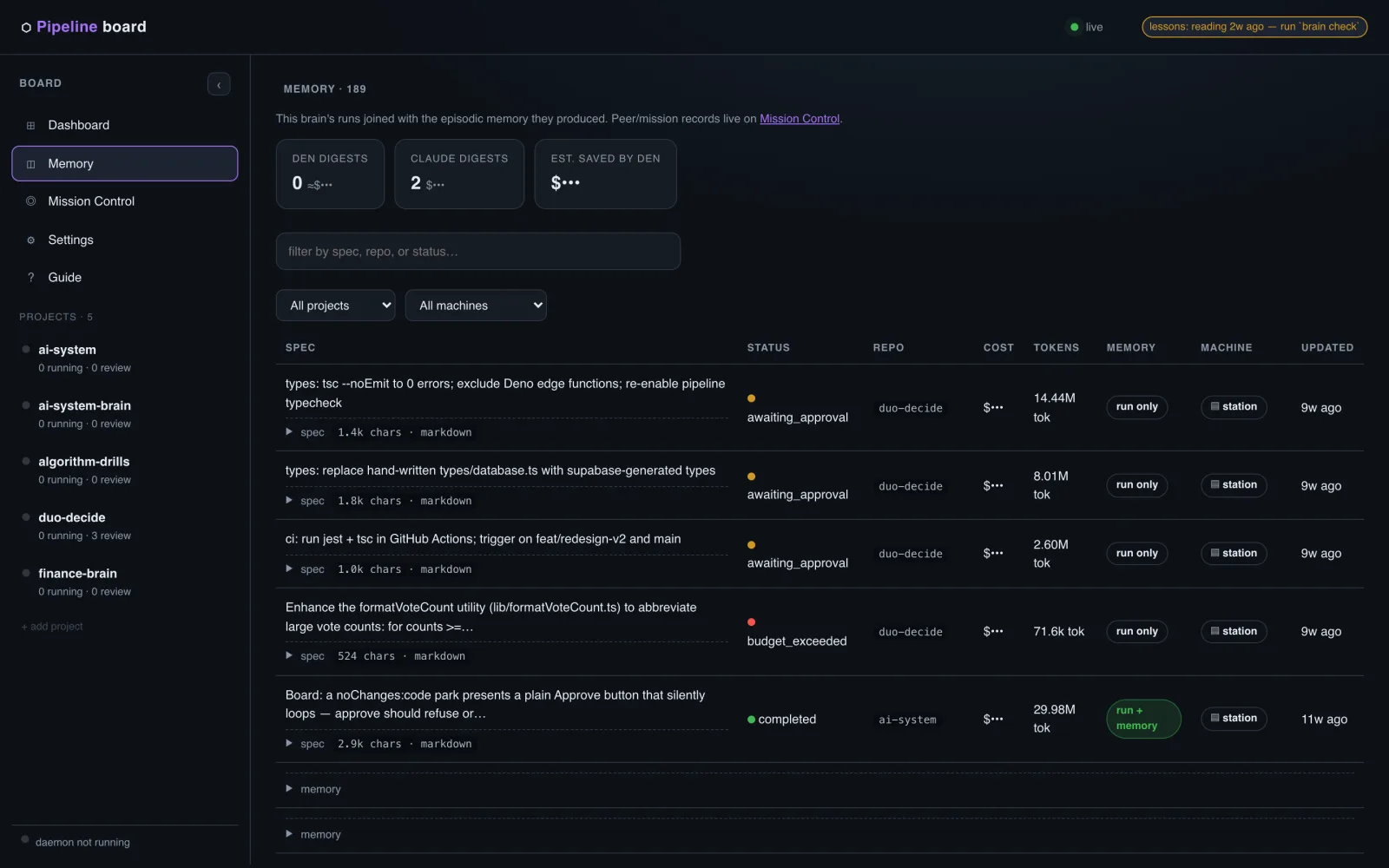
The lesson loop starved
60 of 73 runs pulled in no lessons. The weekly job had run once, at an hour my machine was asleep.
Roadmap · lessons audit
The doc was wrong
The pipeline followed Duo Decide's voting doc to the letter, and vote decisions stuck for three months. The Duo Decide story.
Pull request · duo-decide #25
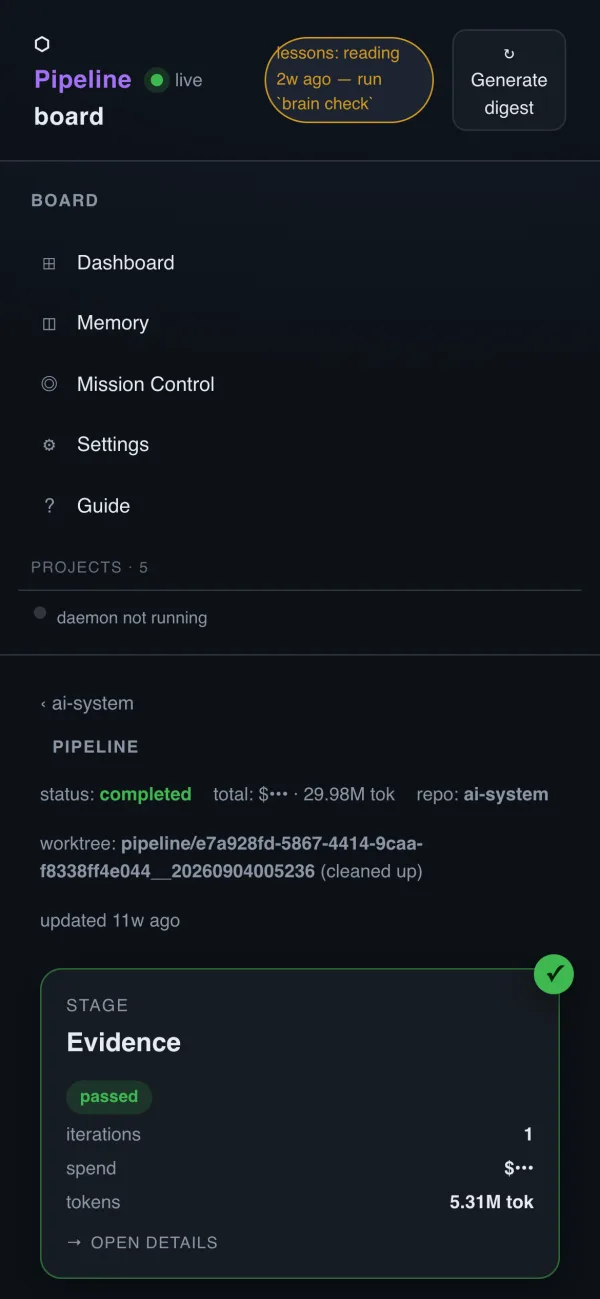
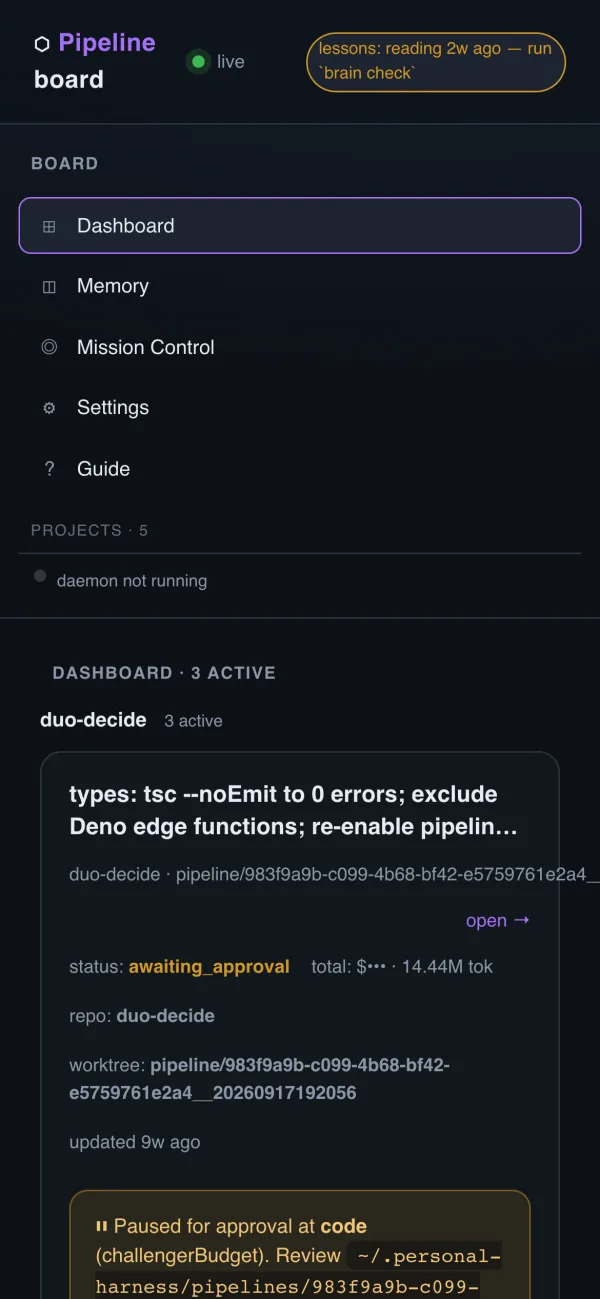
Not built for phones
The board was made for a desk. On a phone, the sidebar fills the top half of the screen.
Capture · the board at phone width
What carries forward to the next version is the habit: run real work first, record every run, and measure before trusting a stage. Still open: a cheaper model first, with a verifier deciding when to escalate, and better memory search for questions worded differently from the lesson.
The top lesson
Repeated retries at the code stage: seen 23 times across 3 repos. One of 14 lessons the ledger produced.
Lesson page · retry-code
Next project
Personal brain